2025-04-03
Spirit Airlines Shutdown: What Happened and What It Means for Travelers
After 34 years of ultra-low-cost flights, Spirit Airlines ceased operations in May 2026. Learn about the airline's sudden closure, what caused its financial collapse, and what it means for budget travelers and the aviation industry.
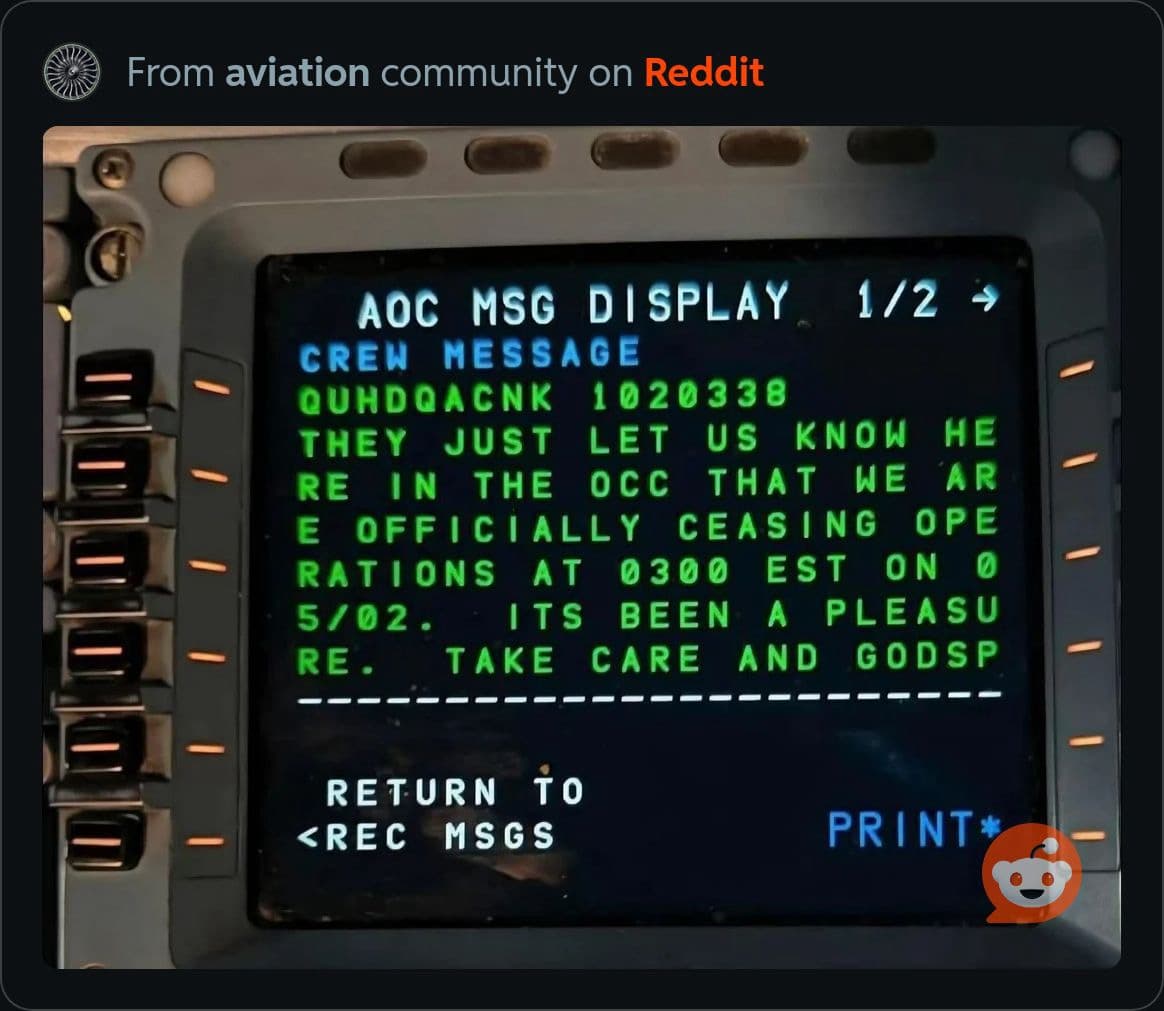
The Sudden End of Spirit Airlines
On Saturday, May 2, 2026, Spirit Airlines announced it had gone out of business after 34 years of operation. The ultra-low-cost carrier, known for its bright yellow planes and deeply discounted fares, ceased all operations immediately with no advance warning to most passengers and employees. All flights were canceled, customer service became unavailable, and approximately 17,000 workers lost their jobs overnight.
The airline's website displayed a simple message acknowledging the shutdown and directing passengers to information about refunds. Some travelers arrived at airports Saturday morning to discover their flights canceled, while Spirit employees learned of their termination through overnight notifications. The final Spirit flight landed at Dallas Fort Worth International Airport from Detroit Metropolitan Airport.
Key takeaways
- Spirit Airlines ceased operations on May 2, 2026 after 34 years.
- All flights were immediately canceled with no advance warning.
- Approximately 17,000 employees lost their jobs.
What Led to Spirit's Financial Collapse
Spirit Airlines had struggled financially since the COVID-19 pandemic, weighed down by rising operating costs and growing debt. By November 2024, when it first filed for Chapter 11 bankruptcy protection, Spirit had lost more than $2.5 billion since the start of 2020. The airline sought bankruptcy protection again in August 2025, reporting $8.1 billion in debts against $8.6 billion in assets.
Several factors contributed to Spirit's demise. Soaring jet fuel prices driven by the Iran war placed enormous pressure on the budget carrier's thin profit margins. A proposed merger with JetBlue in 2023 was blocked by the Biden administration, eliminating what could have been a financial lifeline. The Trump administration considered a government bailout but ultimately no deal was reached, with Transportation Secretary Sean Duffy noting 'we often times don't have half a billion dollars laying around.'
Key takeaways
- Spirit lost over $2.5 billion since 2020 and filed for bankruptcy twice.
- Soaring fuel costs from the Iran war severely impacted operations.
- Blocked JetBlue merger and failed bailout attempts sealed Spirit's fate.
Impact on Passengers and Refunds
U.S. Transportation Secretary Sean Duffy advised passengers with Spirit bookings not to show up at airports, warning that 'there will be no one here to assist you.' Spirit established a reserve fund for customers who purchased tickets directly from the airline, and those passengers should expect refunds. However, people who bought through third-party vendors like travel agents must seek refunds from those vendors instead.
Major airlines stepped in to help stranded travelers. United, Delta, JetBlue, and Southwest offered $200 one-way flights for passengers who could provide Spirit confirmation numbers and proof of purchase. These airlines also offered to help Spirit employees who were stranded away from home and provided preferential treatment in their job application processes.
Key takeaways
- Direct Spirit purchasers can expect refunds from a reserve fund.
- Third-party bookings require refunds from the vendor, not Spirit.
- Major carriers offered $200 rescue fares and preferential hiring for employees.
The Human Cost of the Shutdown
Beyond the logistics and finances, Spirit's closure had a profound human impact. Former flight attendant Freddy Peterson, who had worked for Spirit for 10 years, set his alarm for 3 a.m. Saturday to check the company website when rumors of closure circulated. 'I'll probably do my boo-hoo crying and all that other stuff once I get in the car,' Peterson told reporters as he headed home to Georgia.
Many employees praised Spirit for career opportunities despite the airline's reputation for 'bargain basement chaos.' Peterson noted the company 'done wonders for me,' though he criticized management for poor communication in the closing days, including a canceled employee town hall that left workers uncertain about their future until the very end.
Key takeaways
- 17,000 workers lost jobs with minimal warning or communication.
- Employees praised Spirit for opportunities despite budget carrier stigma.
- Management was criticized for lack of transparency during final days.
Political Blame and the Failed Merger
The Trump administration pointed fingers at the Biden administration for Spirit's financial troubles. Officials specifically blamed President Biden's opposition to the proposed 2023 merger between Spirit and JetBlue, which was blocked on antitrust grounds. Transportation Secretary Duffy said Saturday that 'many at the time said this was a disaster. This merger should have been allowed.'
Supporters of a potential rescue, including labor unions representing Spirit workers, argued that the airline's collapse would harm consumers by reducing competition and increasing airfares. They warned that approximately 17,000 jobs would be impacted. Budget-conscious and leisure travelers were expected to feel Spirit's absence most acutely, especially in cities like Las Vegas, Fort Lauderdale, and Orlando where Spirit had a significant presence.
Key takeaways
- Trump administration blamed Biden for blocking the JetBlue merger.
- Unions warned of job losses and reduced airline competition.
- Spirit's absence will particularly affect budget travelers in key leisure markets.
Spirit's Legacy in the Aviation Industry
Spirit Airlines revolutionized budget travel in the United States with its ultra-low-cost model. The airline operated hundreds of daily flights and brought rock-bottom fares to routes across the country, forcing competitors to lower prices and offer basic economy options. 'We are proud of the impact of our ultra-low-cost model on the industry over the last 34 years,' Spirit's announcement stated.
The airline's business model—charging for everything from carry-on bags to seat selection while offering extremely low base fares—became a template that influenced the entire industry. Despite frequent customer complaints about fees and service, Spirit served a crucial market of price-sensitive travelers who valued affordability above amenities. As one former passenger put it: 'They get you there. It was cheap.'
Key takeaways
- Spirit pioneered the ultra-low-cost carrier model in the U.S.
- The airline forced competitors to introduce basic economy fares.
- Spirit served approximately 1.7 million domestic passengers monthly before closure.
What This Means for Future Budget Travel
Spirit's shutdown raises important questions about the viability of ultra-low-cost carriers in an era of volatile fuel prices and rising operational costs. The airline had sharply reduced capacity in its final months, with about half as many seats available in May 2026 compared to May 2024, signaling deep financial distress.
For budget-conscious travelers, Spirit's closure means fewer ultra-low-fare options and potentially higher prices across the board as competition decreases. Airlines like Frontier and Allegiant will need to absorb Spirit's former passenger base. The closure also serves as a cautionary tale about the thin margins in the budget airline sector and how external shocks—from pandemics to fuel price spikes—can quickly threaten even established carriers.
Key takeaways
- Spirit's closure reduces ultra-low-cost options for budget travelers.
- Remaining budget carriers like Frontier may raise prices with less competition.
- The shutdown highlights vulnerabilities in the low-cost airline business model.
Lessons for Travelers Going Forward
Spirit's sudden closure offers several important lessons for air travelers. First, always book flights with a credit card to ensure refund protection if an airline fails. Second, consider travel insurance for expensive trips, especially when booking with financially troubled carriers. Third, monitor airline financial news before booking—Spirit's repeated bankruptcy filings were public knowledge.
The incident also underscores the importance of booking flexibility. Passengers who had rigid travel plans and no backup options faced the most disruption. Finally, travelers should understand that ultra-low fares come with risks beyond just uncomfortable seats and fees—they may signal an airline under financial stress operating on razor-thin margins that can disappear overnight.
Key takeaways
- Always book with credit cards for refund protection.
- Monitor airline financial health before purchasing tickets.
- Ultra-low fares may indicate financial instability and higher risk.